HR Consulting vs. HR Software: Which Is Better for Businesses Under 50 Employees?
Quick Answer:
For businesses with fewer than 50 employees, HR software is useful, but it usually cannot replace an HR consultant. Software helps organize payroll, onboarding, employee files, time tracking, benefits enrollment, and compliance reminders. An HR consultant helps with judgment calls, messy employee situations, handbook language, manager coaching, investigations, terminations, and decisions that carry legal or financial risk.
The better choice is usually not one or the other. Most small businesses need a simple HR software system to keep records clean and a human HR consultant for the situations where software cannot think, interpret tone, or tell a manager to stop before they make things worse.
If your business has fewer than 50 employees and mostly needs organization, software may be enough for now. If you are dealing with turnover, complaints, confusing leave requests, pay disputes, manager inconsistency, or terminations, you need HR consulting support. The software can store the policy. The consultant helps you apply it without stepping on a rake.
The Real Problem: Small Businesses Want a Tool to Replace Judgment
This is where a lot of owners get sold the wrong dream.
They buy HR software hoping it will make the people problems neat. A clean dashboard. A few automated reminders. Digital signatures. A place to upload offer letters and handbooks. Suddenly everything feels more official.
And to be fair, that part helps.
A scattered folder of employee documents is not a system. A payroll calendar living in someone’s head is not a system. A handbook from seven years ago sitting in a forgotten PDF is not a system. HR software can clean up a lot of that.
But software does not know your employee cried in the break room after a supervisor made a comment. Software does not know whether that “attendance problem” is actually a medical accommodation request. Software does not know that firing someone two days after they complained about overtime looks terrible, even if the termination reason is technically valid.
Software organizes.
People interpret.
That distinction matters.
Why does this question come up under 50 Employees
Businesses with fewer than 50 employees usually live in an awkward middle ground. They are too big to operate on memory and trust alone, but often too small to justify a full-time HR manager. So the owner, bookkeeper, office manager, or operations lead becomes the accidental HR department.
That works until the questions get harder.
Can we terminate this employee today?
Do we have to approve this leave request?
Is this person exempt or nonexempt?
Can we reduce someone’s hours after they complain?
What do we do if two employees accuse each other of harassment?
Should we let one employee work remotely if we denied it for someone else?
This is the point where software starts to hit its ceiling.
A platform can give you templates, reminders, workflows, and document storage. It may even offer compliance alerts. But it cannot take responsibility for the judgment behind the decision. And under 50 employees, judgment is usually exactly what the business is missing.
What HR Software Is Actually Good At
HR software is useful when the problem is administrative chaos.
If employee files are scattered across email, payroll folders, and someone’s desktop, software helps. If onboarding paperwork is inconsistent, software helps. If employees keep asking where to find policies, software helps. If time-off requests are being approved through random text messages, software helps.
The best use of HR software is to create one reliable place for routine HR operations.
That usually includes:
Employee records
Offer letters
Digital onboarding
I-9 tracking
Handbook acknowledgments
Time-off requests
Payroll integrations
Benefits enrollment
Time tracking
Compliance reminders
Performance review forms
Document storage
Basic reporting
For a business under 50 employees, that can be a major upgrade. It reduces confusion, improves consistency, and gives the owner a better paper trail.
And yes, the paper trail matters.
When an employee dispute happens, the business does not want to hunt through six inboxes and three spreadsheets to figure out what was signed, when it was signed, and who approved what.
What HR Software Is Bad At
HR software is bad at human context.
It can tell you an employee has missed five shifts. It cannot tell you whether the absences might involve protected sick leave, pregnancy limitations, a disability, or a manager who is creating the problem. It can store a harassment policy. It cannot decide whether a complaint requires an investigation. It can generate a termination checklist. It cannot tell you whether today is the wrong day to fire someone.
That is the limitation.
Software works best when the process is clear and routine. People’s problems are often neither.
Small businesses get into trouble when they treat HR software like a substitute for HR judgment. They click through a workflow, generate a warning letter, or use a template without understanding the risk behind the situation.
That is not efficiency.
That is just speeding up a bad decision.
What an HR Consultant Is Actually Good At
An HR consultant is useful when the problem requires experience, judgment, and risk control.
A good consultant helps owners think through the situation before they act. They can review a termination plan, help write a policy, guide an investigation, train managers, clean up a messy handbook, audit employee files, evaluate wage classifications, or help respond to an employee complaint.
They are especially useful when the owner is too close to the situation.
That happens constantly.
The owner knows the employee. Knows the history. Knows the frustration. Knows what they meant to say. But in HR, what the owner meant is often less important than what the employee heard, what the records show, and what the timing looks like.
A consultant brings distance.
Sometimes that distance is the thing that keeps the business from making the expensive move.
Where HR Consultants Beat Software Every Time
HR consultants are stronger than software in situations involving:
Employee complaints
Harassment or discrimination concerns
Retaliation risk
Terminations
Performance improvement plans
Manager conflict
Leave and accommodation requests
Pay disputes
Policy interpretation
Handbook cleanup
Multi-state employment questions
Wage classification concerns
Workplace investigations
Difficult conversations
Software can support these situations, but it should not lead them.
For example, a platform may have a template for a written warning. That does not mean the warning is appropriate. A consultant can ask the better questions. Has the employee been warned before? Were other employees treated the same way? Is there a protected issue involved? Did the manager document the facts or just vent? Is the timing risky?
That is the work.
Not the template.
HR Software vs. HR Consulting: The Practical Comparison
| Category | HR Software | HR Consultant |
|---|---|---|
| Best Use | Organizing routine HR administration | Handling judgment-heavy people issues |
| Strength | Systems, reminders, records, workflows | Advice, interpretation, risk control |
| Weakness | Cannot understand context or nuance | Costs more per hour or project |
| Best Fit | Businesses needing better organization | Businesses facing complaints, turnover, discipline, or compliance questions |
| Common Mistake | Treating templates as legal strategy | Calling only after something has already blown up |
| Under 50 Employees | Useful for structure | Often essential for difficult decisions |
This is the cleanest way to think about it.
HR software keeps the files straight.
HR consulting keeps the decisions from getting reckless.
A business under 50 employees often needs both, but not always at the same level.
The Under-50 Employee Decision Matrix
| Business Situation | Better Fit | Why It Works |
|---|---|---|
| Fewer than 10 employees; files are scattered but team friction is rare. | HR Software | Basic automated systems provide enough baseline structure without overhead. |
| 10 to 24 employees; the owner is personally handling every interpersonal dispute. | HR Consultant + Basic Software | The business has outgrown casual management; you now need both a digital paper trail and professional judgment. |
| 25 to 49 employees; supervisors are making completely inconsistent decisions. | HR Consultant / Outsourced HR | Risk exposure is scaling up fast; management alignment and policy standardization are now critical. |
| Your business faces high or rising turnover. | HR Consultant First | Software can track the exact rate of turnover, but only a human consultant can diagnose why it is happening. |
| You are currently managing employee complaints or terminations. | HR Consultant | These events carry intense legal liabilities and require human nuance, documentation reviews, and risk calibration. |
| You have an outdated handbook or unreviewed policies. | HR Consultant First | Software will store and distribute bad policies just as effortlessly as good ones. Fix the foundation before automating it. |
The last line is the one owners should not miss.
Software can make a bad system look organized.
That does not make it safe.
The Trap: Buying Software Before Fixing the Policies
A lot of businesses buy HR software because they feel disorganized.
Fair.
But then they upload the same outdated handbook, the same vague attendance policy, the same unclear overtime rules, and the same offer letter they copied from a friend’s company six years ago.
Now the mess has a login screen.
That is not modernization.
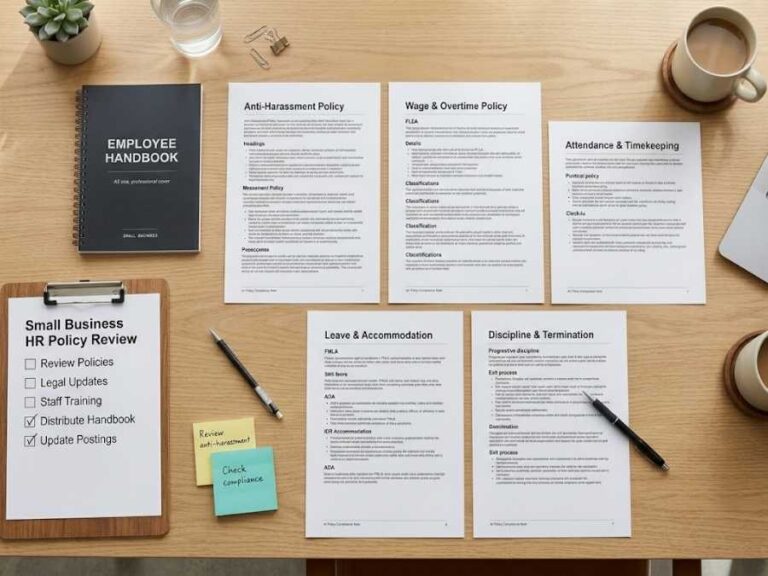
Before buying software, or at least before fully relying on it, the business should review the basics. Are employees classified correctly? Are wage and hour rules clear? Is there an anti-harassment policy? Is there a leave and accommodation process? Are managers trained on how to use the policies?
If the underlying HR structure is weak, software will not fix it.
It may just make the weak structure easier to distribute.
The Trap: Calling a Consultant Too Late
The opposite mistake is waiting too long to call a human.
Owners often call an HR consultant after the manager has already sent the angry email, after the employee has already filed the complaint, after the termination has already happened, or after payroll has mishandled overtime for six months.
At that point, the consultant can still help.
But now they are cleaning up.
Cleanup is slower, more expensive, and less satisfying than prevention. A 30-minute call before a termination can save weeks of backtracking later. A handbook review before hiring 15 more people is easier than rewriting policy after a dispute. Manager training before the first harassment complaint is cheaper than an investigation after the fact.
The best time to use an HR consultant is before the owner is emotional.
That is usually before the meeting, before the final warning, before the firing, and before the “quick payroll fix.”
The Core Divide: Administration vs. Judgment
What HR Software Does Best:
It handles the administrative chaos of corporate routine. Use platforms to lock down digital onboarding workflows, secure I-9 records, track accrued PTO, house handbook sign-offs, and store payroll data.What an HR Consultant Does Best:
They navigate the high-friction, legally sensitive human exceptions. Bring in a consultant to manage open harassment complaints, review high-risk terminations, untangle confusing medical leave requests, and audit employee wage classifications.
This is the decision point.
If the work is repetitive, trackable, and document-based, software probably helps.
If the work involves conflict, timing, legal exposure, or judgment, bring in a human.
Cost: Which One Is Cheaper?
HR software is usually cheaper on the surface.
Many platforms charge monthly fees based on employee count or selected features. For a small business, that can feel manageable. You pay for the system, automate the routine work, and reduce admin headaches.
HR consulting costs more per hour or per project. That can make owners hesitate.
But this is not a simple price comparison.
Software saves time on routine administration. Consulting helps prevent expensive decisions. One organizes the business. The other protects it when judgment matters.
A small business should not pay consultant rates for every basic PTO request. That is what software is for. But it also should not rely on software to handle a retaliation-sensitive termination, a disability accommodation request, or a harassment complaint.
Use the cheaper tool for the routine work.
Use an experienced human for the risky work.
What About Payroll Companies That Offer HR Tools?
Many payroll providers now offer HR add-ons. These may include employee handbooks, compliance alerts, onboarding tools, document storage, training modules, and access to HR advisors.
This can be a good middle option for businesses with under 50 employees.
But read the fine print.
Some services are mostly software with a resource library. Others include access to real HR professionals. Some offer general guidance but not deep consulting. Some will help with handbook templates, but not complex employee relations. Some are useful for compliance reminders but not enough for a messy termination or investigation.
The sales page may say “HR support.”
That can mean many different things.
Ask what you actually get. Can you speak with an HR professional? Are they certified or experienced? Will they review your handbook? Will they advise on terminations? Will they help with employee complaints? Are there limits on calls? Do they know your state laws?
Do not buy a label.
Buy the support you actually need.
The Best Setup for Most Businesses Under 50 Employees
For most businesses with under 50 employees, the best setup is a hybrid approach.
Use HR software for structure.
Use an HR consultant for judgment.
That might look like:
A simple HR platform for employee files, onboarding, time off, and acknowledgments
A reviewed employee handbook
A clear anti-harassment and complaint policy
Basic wage and hour procedures
A leave and accommodation process
A consultant available for difficult situations
Manager training once or twice a year
This is not overkill.
This is basic infrastructure for a company that has grown beyond “everyone just knows how we do things.”
The goal is not to make a small business feel like a corporate office. The goal is to keep the business from making avoidable mistakes because nobody had time to build a real HR process.
When Software Alone May Be Enough
Software alone may be enough if the business is very small, low-risk, stable, and not dealing with many employee problems.
For example, a six-person professional services firm with low turnover, salaried employees, simple benefits, and no major compliance issues may only need basic HR software plus an occasional policy review.
That is reasonable.
Not every business needs heavy HR support from day one.
But software alone becomes risky when the business has hourly workers, overtime, high turnover, multiple managers, remote employees in different states, safety issues, commission pay, leave requests, complaints, or terminations.
In those cases, the software may help organize the evidence.
It will not help you make the right call.
When Consulting Should Come First
Consulting should come before software if the business already has messy people issues.
If your handbook is outdated, employee classifications are unclear, managers are inconsistent, employees are complaining, or terminations feel risky, do not start by shopping software. Start by getting the HR foundation reviewed.
Otherwise, you may spend money digitizing a broken system.
An HR consultant can help clean up the policies, identify risk, standardize forms, train managers, and decide what software features the business actually needs. That way, when you do buy software, you are loading a better system into it.
That sequence matters.
Fix the structure.
Then automate it.
The Bottom Line: Software Tracks the Process, Consultants Protect the Decision
For businesses under 50 employees, HR software and HR consulting solve different problems.
HR software is better for organization, records, workflows, onboarding, time-off tracking, and reminders. HR consulting is better for judgment, risk, employee conflict, policy design, manager coaching, investigations, and terminations.
If the business is small, stable, and mostly disorganized, start with software and get occasional consulting help.
If the business is growing, dealing with employee friction, or approaching 25 to 50 employees, bring in a consultant or outsourced HR support and use software as the operating system underneath it.
The software can tell you where the file is.
The consultant can tell you whether the file is going to hurt you.
That is the difference.
Next Step for Owners
Before buying HR software or hiring an HR consultant, list the last five employee issues that interrupted your week.
Were they administrative problems, like missing documents, PTO tracking, or onboarding forms?
Or were they judgment problems, like complaints, discipline, pay disputes, leave requests, manager conflict, or terminations?
If most of the problems were administrative, start with the software.
If most of the problems require judgment, get a human involved before the next one lands on your desk.
Frequently Asked Questions About HR Consulting vs. HR Software for Small Businesses
Is HR software enough for a business with fewer than 20 employees?
It depends on what the business is dealing with. If the main problem is scattered files, inconsistent onboarding, or missing paperwork, HR software may be enough for now. If the business is managing complaints, terminations, leave requests, pay disputes, or manager inconsistency, software alone will not cover it. The administrative organization is useful. The judgment it cannot provide is where the risk lives.
What is the difference between HR software and an HR consultant?
HR software handles routine administration — storing documents, tracking time off, managing onboarding, sending compliance reminders, and keeping employee records in one place. An HR consultant handles situations that require experience, judgment, and risk awareness — terminations, investigations, policy design, accommodation requests, wage classification questions, and manager coaching. Software organizes. Consultants protect.
Can HR software help with employee complaints or harassment issues?
Software can store policies and document reports, but it cannot manage an investigation, assess legal risk, or tell a manager what not to say. Harassment complaints and employee relations issues require human judgment, careful documentation, and a process that holds up to scrutiny. Software can support that process. It should not lead it.
When should a small business use an HR consultant instead of software?
A small business should bring in an HR consultant when it faces situations that carry legal or financial risk: terminations, harassment or discrimination complaints, retaliation concerns, leave and accommodation requests, wage classification audits, manager conflicts, or any situation where the timing or wording of a decision could become important later. If the owner is already emotional about the situation, that is usually a sign a consultant should be involved before anything happens.
Are payroll platforms with HR add-ons the same as outsourced HR?
Not usually. Many payroll providers offer HR tools that include document storage, compliance alerts, handbook templates, and resource libraries. Some include access to HR advisors. But the depth varies significantly. A resource library is not the same as a professional reviewing your termination plan. Before assuming a payroll platform’s HR add-on covers your needs, ask whether you can speak with a certified HR professional, whether they will advise on terminations and complaints, and whether they know your state’s specific laws.
Should a business buy HR software before or after getting an HR consultant?
If the business has messy policies, unclear classifications, outdated handbooks, or active employee problems, get the consultant first. Software will store and distribute a bad policy just as efficiently as a good one. Fix the HR foundation, then automate it. If the business is reasonably clean and just needs better organization, software can come first, with consulting available for difficult situations.
Is outsourced HR the same as hiring an HR consultant?
They overlap but are not identical. An HR consultant is typically project-based or on-call — you bring them in for specific situations like a handbook review, an investigation, or a termination. Outsourced HR is usually an ongoing arrangement where a provider handles a broader range of HR functions on a regular basis, similar to having a part-time HR department. Both can be the right answer depending on how much ongoing support the business needs versus how often complex situations actually come up.
How do I know if my business needs HR software, an HR consultant, or both?
List the last five employee issues that interrupted your week. If most were administrative — missing documents, PTO tracking, onboarding paperwork — start with software. If most required judgment — complaints, discipline, pay disputes, leave requests, manager conflict, terminations — get a consultant involved before the next one arrives. Most businesses with between 15 and 50 employees need both: software to keep the routine work organized and a consultant available when the situation requires a human who can think through the risk.